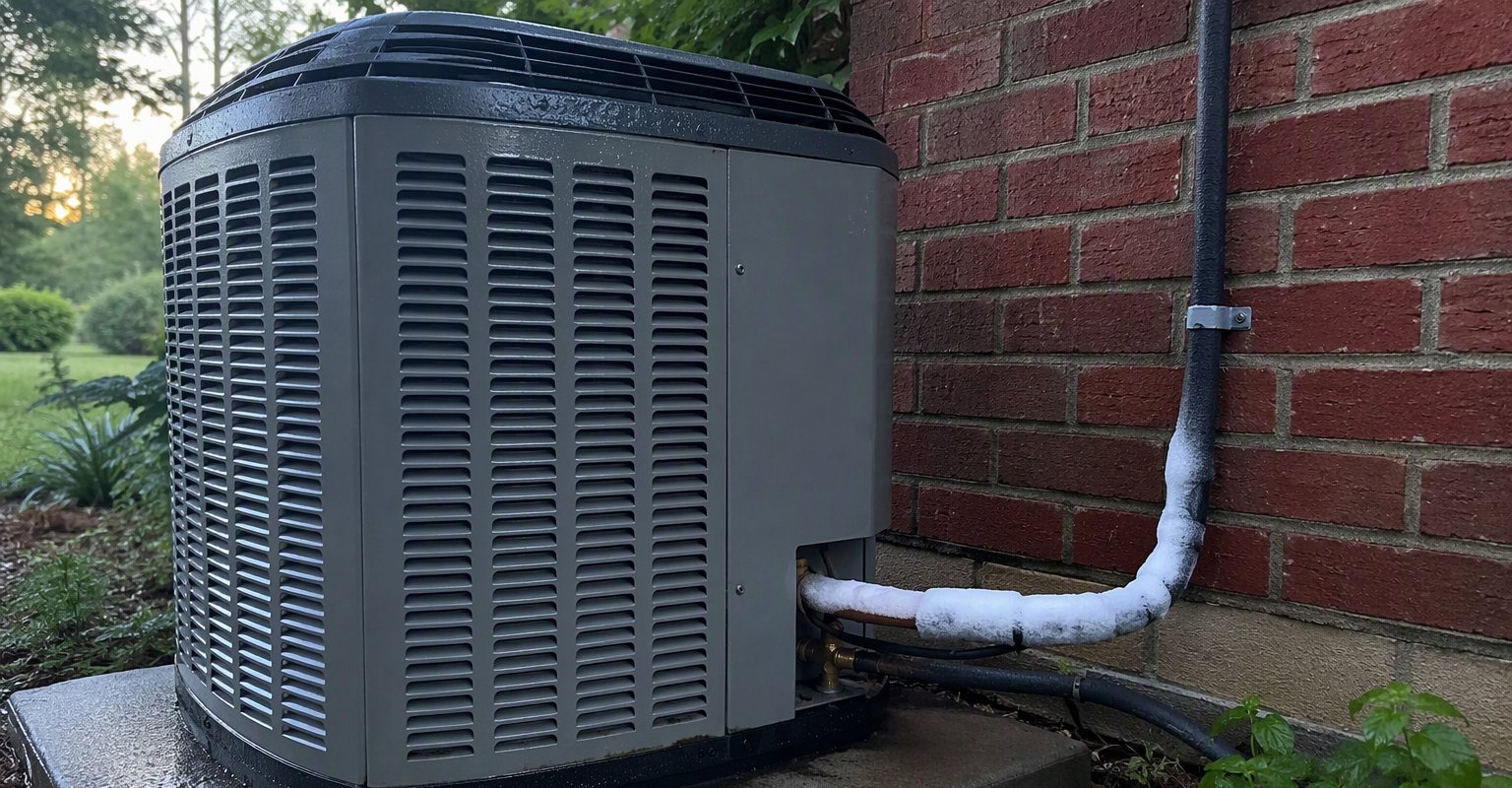
Ice on a ninety-degree day?
It confuses a lot of homeowners: the system runs constantly, the house won’t cool, and there’s ice where ice shouldn’t exist. A frozen evaporator coil is near the top of the Reading call board every July — and it almost always traces to one of two causes. The coil freezes when it gets too cold, and it gets too cold when too little warm air crosses it, or when the refrigerant inside it runs low. Humidity makes it worse here: the valley stays damp all summer, and the coil runs wet for months, so the ice has plenty of raw material.
The two usual suspects
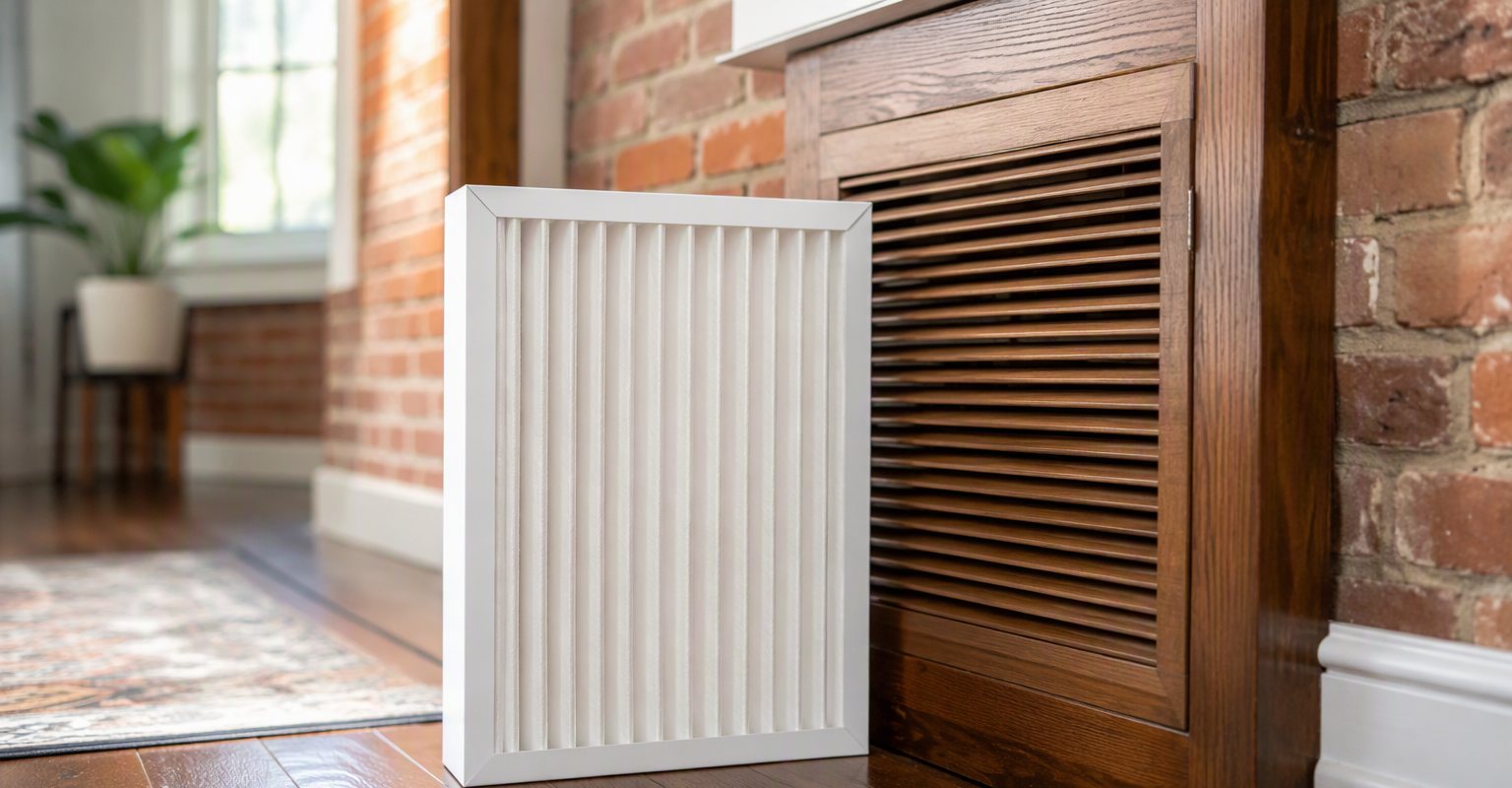
Airflow: a clogged filter, closed registers, a dirty blower wheel, or a crushed duct starves the coil of warm air. Without heat to absorb, the coil drops below freezing and the condensation on it turns to ice — which blocks more airflow, which builds more ice. In pollen season on the valley floor, the filter side of this is nearly universal.
Refrigerant: a slow leak lowers the charge, and a low charge drops the coil temperature the same way. Refrigerant doesn’t get “used up” — if it’s low, there’s a leak, and topping off without finding it just buys a few weeks.
What to do right now
Turn the system off at the thermostat — the fan can stay ON to speed the thaw — and let the ice melt completely. Running it frozen can kill the compressor, which turns a small repair into a big one. While it thaws: replace the filter, open every register, and check that nothing’s blocking the returns. If it freezes again on a clean filter, the refrigerant circuit needs a proper diagnosis — that’s gauges and a leak search, not guesswork.
What the repair looks like
If it’s airflow, the fix is usually modest: filter, blower cleaning, or duct correction, plus a coil check. If it’s refrigerant, the honest sequence is find the leak, fix the leak, then recharge — you’ll get the quote in writing before any of it starts. Either way, the job ends with the system measured back to spec: charge verified, split checked, cycle run twice.