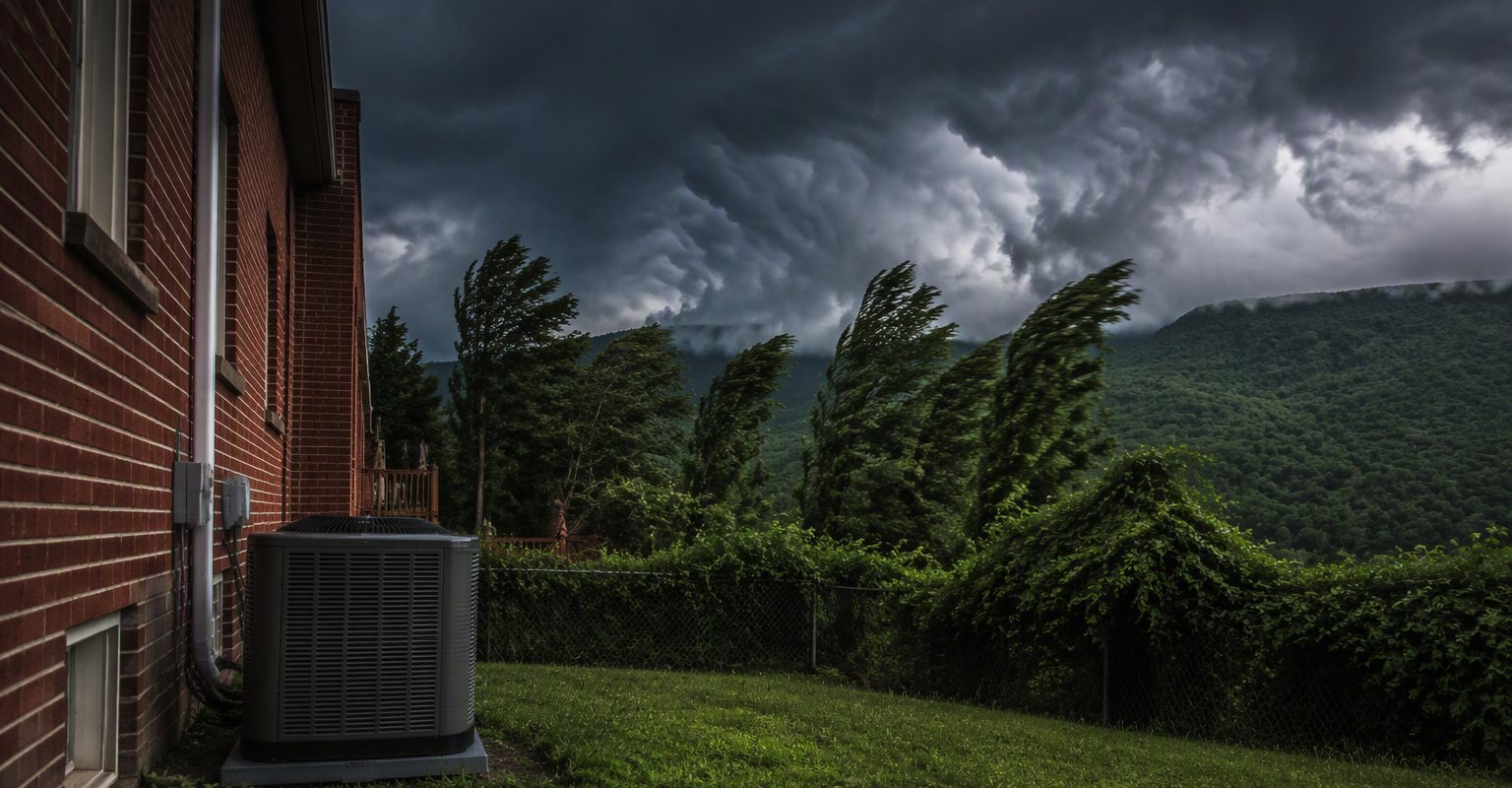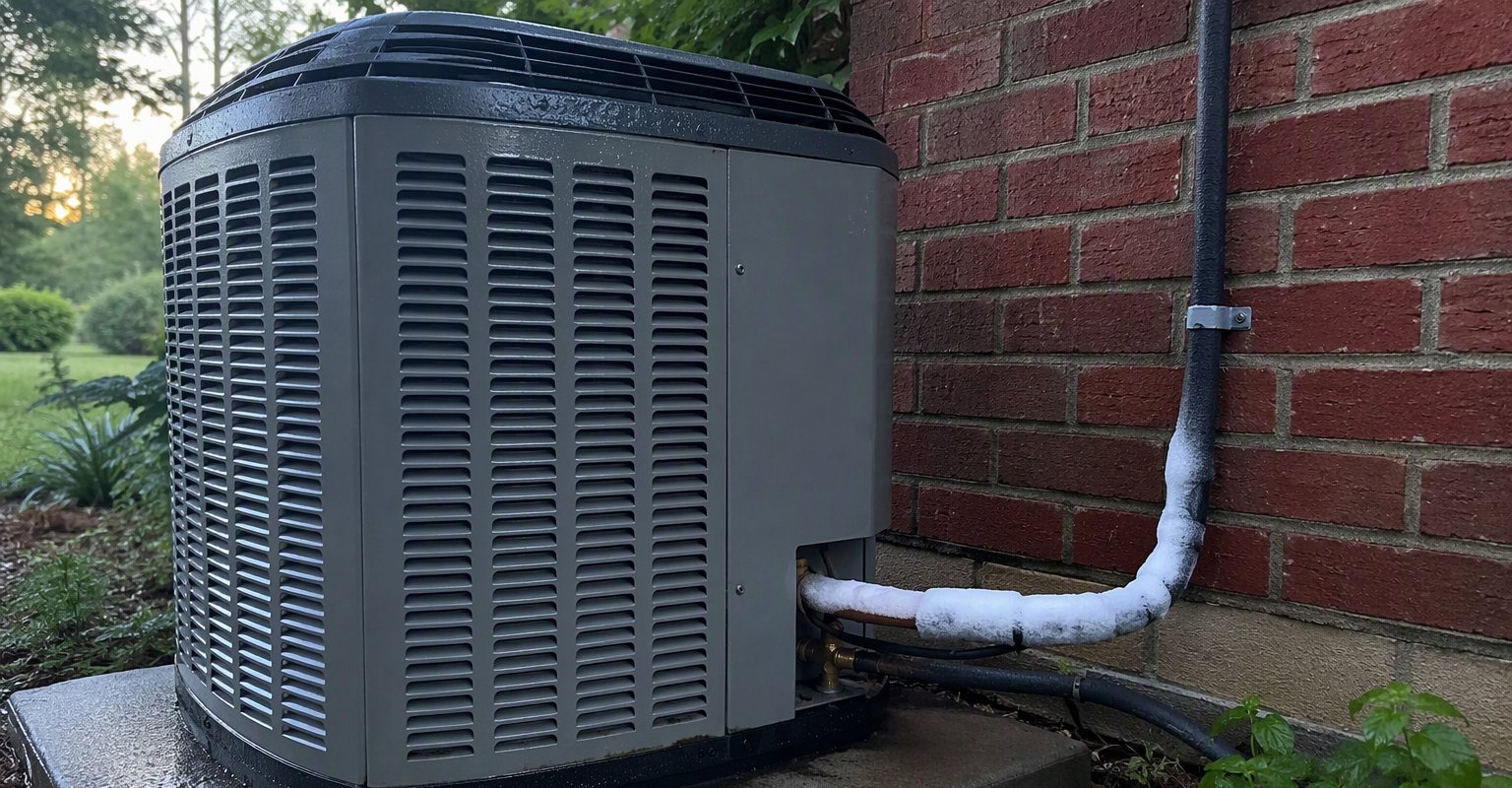
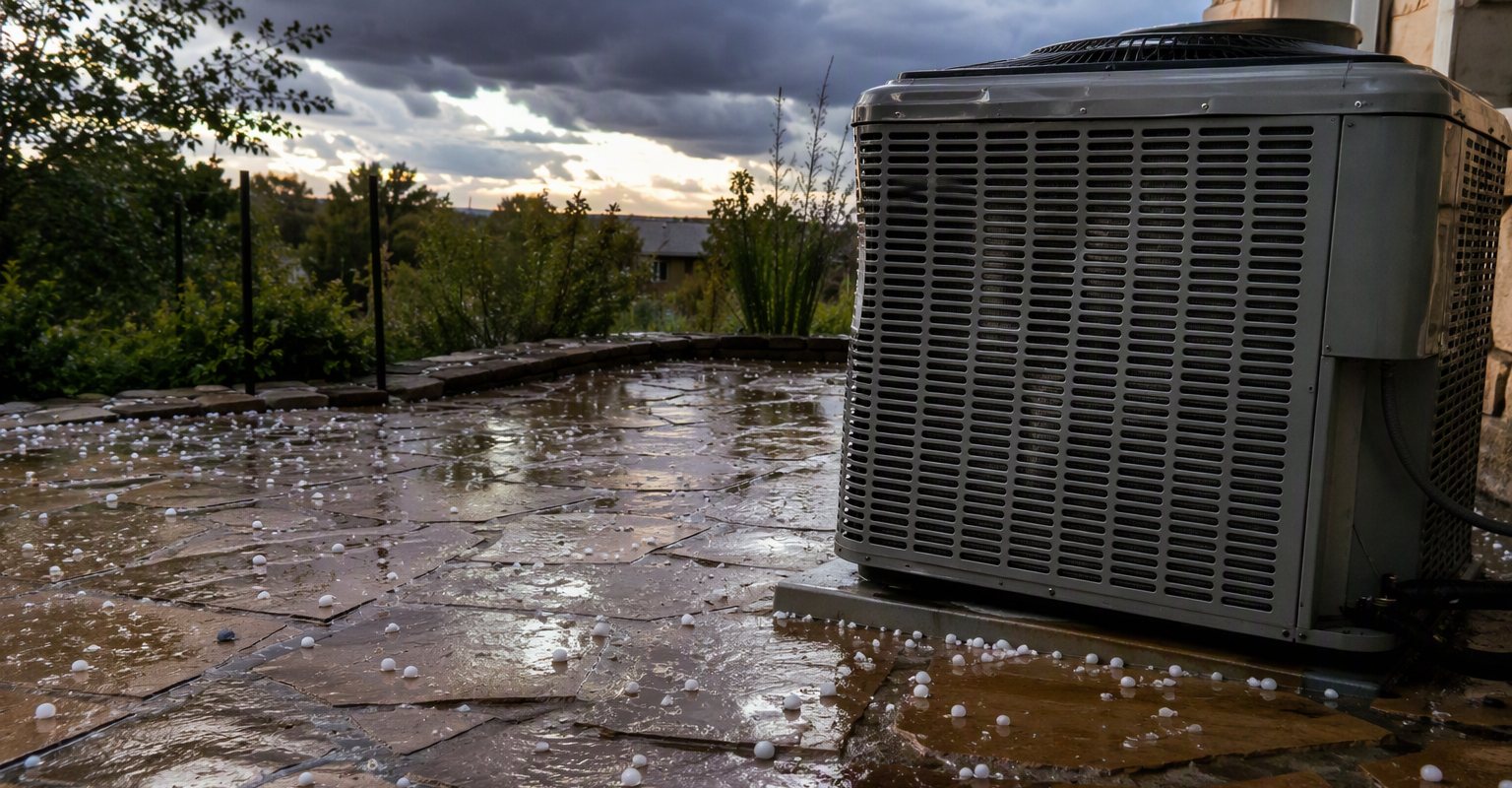
What hail does to a condenser
Your outdoor unit’s coil is wrapped in paper-thin aluminum fins — thousands of them, spaced like a comb, and every one of them is how the system rejects heat. Hail flattens them. A few flattened fins are cosmetic. Whole flattened faces choke the airflow the coil was built around: the system still runs, but it runs hotter, longer, and weaker, and the compressor pays for it every day. In severe cases, hail bends the fan, dents the cabinet, or — worst of all — damages the refrigerant lines, which turns a cleanup into a leak.
The five-minute check
Once the storm passes and it’s safe, walk the unit from all four sides. The fins should stand straight and even, like the teeth of a comb. Look for flattened, silvery patches — that’s hail bruising — and check the top fan grille for dents. Then run the system and listen: new buzzing, rattling, or a fan that wobbles are all post-storm stories. Inside, note whether cooling feels weaker over the next few days; a system that ran fine before the storm and labors after it is telling you something.
When it’s cosmetic, and when it’s not
Light dimpling on one face: monitor it. Large flattened areas, a bent fan blade, visible kinks in the refrigerant lines, or any oily residue — that’s a service call, and it’s better made before the next heat wave than during it. Moderate fin damage can often be combed straight; a coil too far gone gets replaced on your schedule instead of failing during the county’s hottest week.
The insurance angle, honestly
Hail damage to a condenser is generally part of a homeowner’s storm claim — and it’s routinely missed by adjusters walking a roof claim. Document the unit with photos immediately after the storm, wide shots and close-ups both, and get any repair assessment in writing; it’s the number the claim needs. Filing deadlines are real, and “we noticed in August” weakens a claim that same-week photos would have made airtight.