Corridor storms are hard on outdoor units
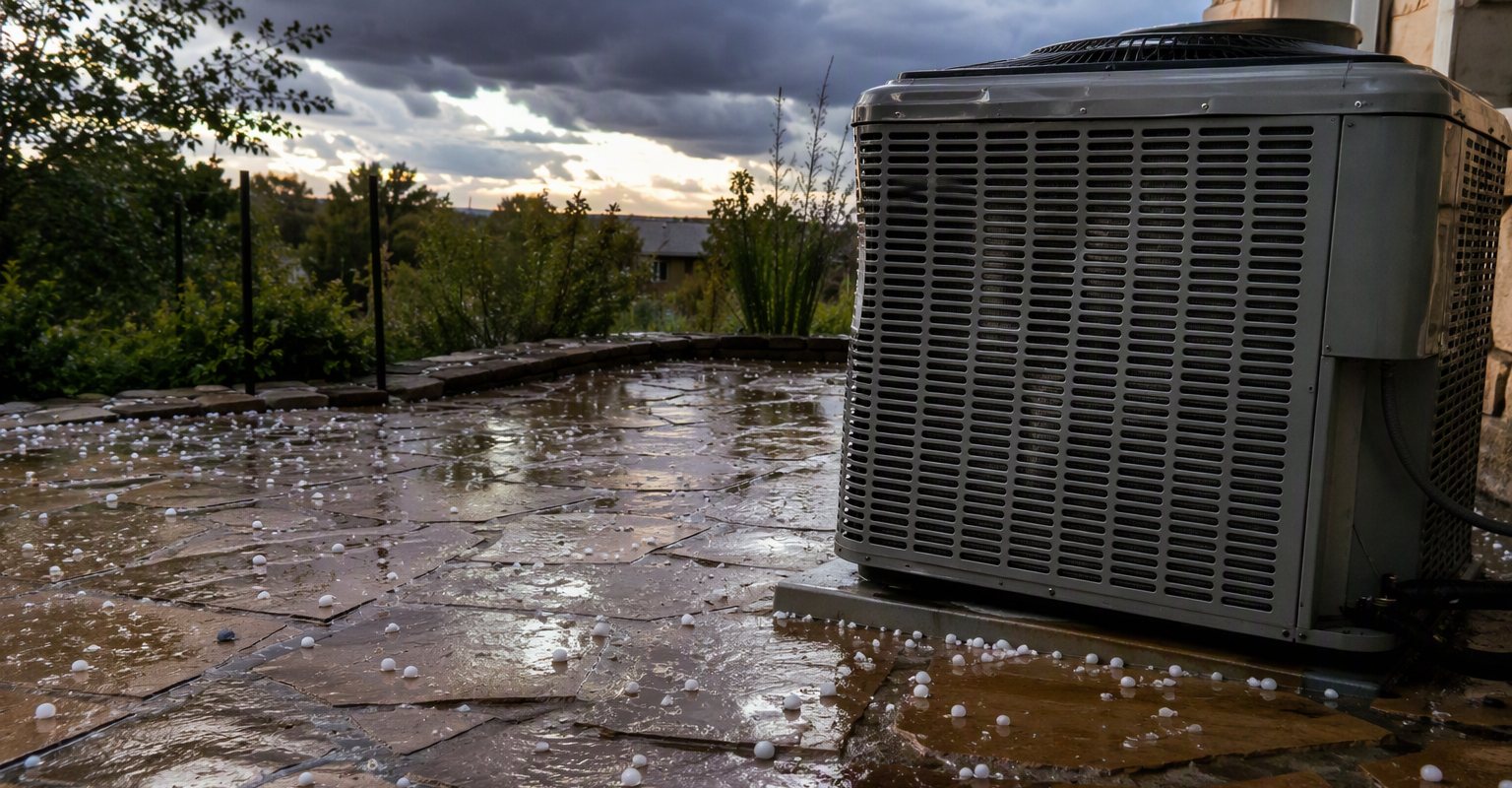
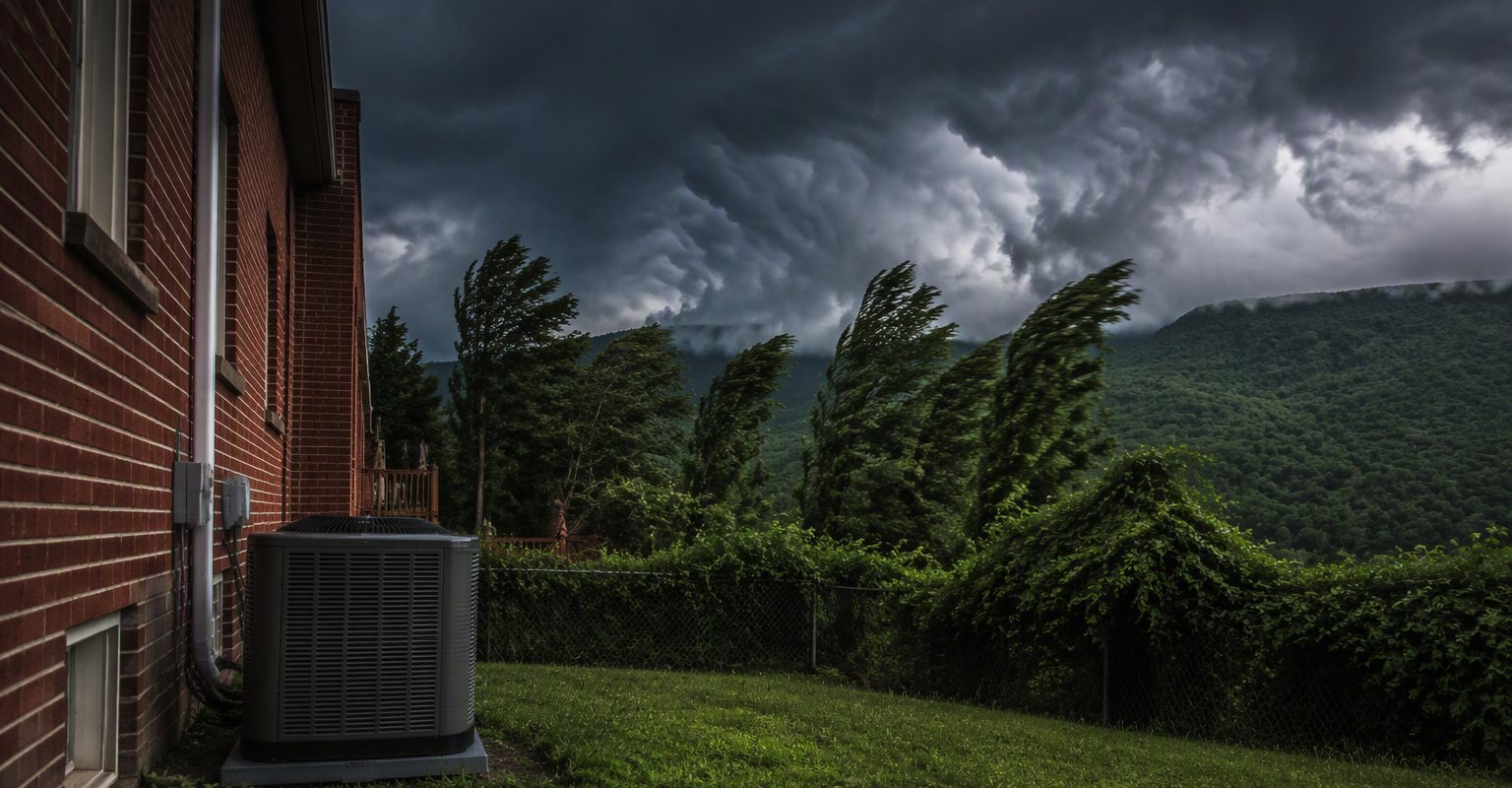
Reading sits where the fronts funnel through. Storms build over the farmland to the west, squeeze through the gap in the ridge, and arrive along the I-78 corridor fast — wind, hail, driving rain, and debris in a twenty-minute package — and the condenser beside your house takes the whole hit. The damage isn’t always dramatic: more often it’s fins slowly packed with pollen and shredded leaves, a cabinet nudged off level by saturated ground, or debris driven through the fan grille. Small stuff, compounded over a season, is how systems age fast here.
Before the season
Clear a two-foot radius around the unit — no mulch piles, no stacked firewood, no shrubs leaning on the cabinet. Trim anything overhead that wind can snap down onto the fan grille — the county’s mature trees drop limbs in every big blow. Check that the unit sits level on its pad; freeze-thaw heaves pads here every winter, and a tilted cabinet strains the compressor mounts and the lineset. And confirm the disconnect cover seals — driven rain finds gaps that vertical rain never would.
After a big blow
Walk the unit before the next run. Look for debris packed into the fins and rinse gently from the inside out with a garden hose — never a pressure washer, which folds fins flat. Clear anything off the fan grille, check that the lineset insulation survived, and listen to the first full cycle for new rattles. If the unit took a direct hit from anything substantial, keep it off until it’s been looked at — the safe pause costs an afternoon, the alternative can cost a compressor.
The winter rule that surprises newcomers
When the season turns, never wrap or cover the outdoor unit of a heat pump — it runs all winter and needs to breathe. For a straight AC condenser, a breathable top cover keeps out the worst debris, but a full plastic wrap traps moisture and invites corrosion and nesting. The valley sends weather twelve months a year — corridor storms in July, nor’easters in January; the unit was built for most of it. The checklist above covers the rest.